

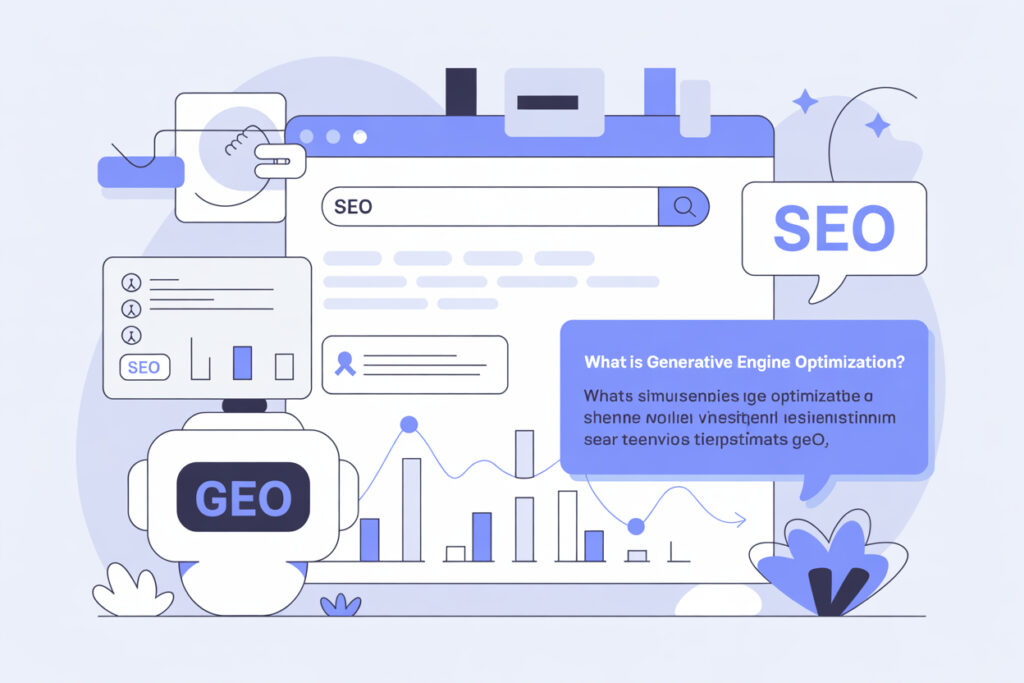
What Is Generative Engine Optimization? Tips & Workflows To Get It Right
In today’s changing landscape of digital content, Generative Engine Optimization (GEO) is becoming the future beyond traditional SEO. As artificial intelligence-powered platforms such as ChatGPT, Google’s Search Generative Experience (SGE), and Bing Chat become a part of mainstream information discovery, companies and creators need to align their strategies.
What is Generative Engine Optimization?
Generative Engine Optimization is a process of optimizing your content to rank well in AI-generated responses rather than traditional search engine results pages (SERPs). Rather than optimizing only for Google blue links, you’re optimizing for AI summaries, featured snippets, and synthesized responses in generative tools.
💡 Why GEO Matters in 2025
AI platforms are increasingly used for search-like queries.
Google SGE and ChatGPT are transforming the way users engage with content.
Traditional SEO practices may not ensure visibility in AI-generated responses.
Optimizing for generative engines can also result in brand mentions, link-backs and authority positioning in outputs generated through AI.
⚙️ Important Tips & Workflow for Successful Generative Engine Optimization
- Emphasize Clarity & Friendly Tone
Write content that answers questions directly and clearly.
Use a human-like, assistive, and organized tone in response to questions. - Establish Expert-Level Topical Authority
Cover long-tail keywords and associated subtopics in a single piece of content.
Include FAQ sections, step-by-step work flows and stats-based insights. - Employ Structured Data & Clean Formatting
Use headings (H2, H3), bullet lists, and tables.
Organized information is simpler for an artificial intelligence to process and utilize in responses. - Optimize for AI Prompts and Questions
Here is a revised answer in easy-to-read format:
What is Natural Catuary?
=======================
A Natural Catuary
Back to Basics: The Study of Equational Logics - Be Credible & Citable
Provide sources with links to reputable references and utilize first-hand information.
AI prefers to link to reputable, high-authority sources.
🛠 Sample Workflow: GEO Content Creation Template
Choose a target prompt or what your audience would likely inquire about (for example, “How to rank in AI responses?”).
Form a content brief with:
- Answer summary (2–3 sentences)
- Expanded explanation (300–500 words)
- Visual tool (diagrammatic representation, checklist,
- Related FAQs (3–5)
- Add expert insight, quotes, or examples.
HELMUT DUBIEL
Dr. med. pharm.
Updated frequently in accordance with AI-produced result tendencies. 💬
🔍 Geo vs. Traditional SEO: What’s the Difference?
| Search Engine Describe Feature | Traditional SEO | Generative Engine Optimization |
|---|---|---|
| Target | Google (Bing) SERPs | AI-generated responses (ChatGPT, |
| Re-formatting Focus | Keywords, meta, backlinks | Readability, structure, accuracy |
| Social Profiles on Social NetworkingSites | ||
| Ranking Indicators | Clicks, bounce, time-on-site | Being in AI sumarries |
What Is Generative Engine Optimization (GEO)?
Tips & Workflows to Get It Right in 2025
As AI-powered platforms like ChatGPT, Google’s Search Generative Experience (SGE), and Bing Chat redefine how people search for and consume content, traditional SEO is no longer enough. Enter Generative Engine Optimization (GEO) — the strategy that ensures your content gets noticed by generative AI, not just search engines.
🧠 What Is Generative Engine Optimization?
Generative Engine Optimization (GEO) is the practice of optimizing your content to appear in AI-generated answers, summaries, and featured responses — not just classic search engine results pages (SERPs). Rather than just targeting Google’s “blue links,” GEO focuses on helping AI platforms understand, trust, and highlight your content.
💡 Why GEO Matters in 2025
- AI platforms like ChatGPT and Google SGE are replacing traditional searches.
- Search behavior is shifting toward question-based, conversational queries.
- Traditional SEO alone may no longer guarantee visibility.
- GEO can lead to brand mentions, backlinks, and authority in AI-generated content.
⚙️ GEO Optimization Tips & Workflows
1. Prioritize Clarity & a Conversational Tone
- Write clear, concise, and direct answers to questions.
- Use a tone that’s human, helpful, and friendly — much like AI itself.
2. Build Topical Authority
- Address subtopics and long-tail keywords in one comprehensive piece.
- Include FAQs, step-by-step guides, and data-driven insights.
3. Use Structured Data & Clean Formatting
- Break content into headings (H2, H3), bullet points, and tables.
- Structure helps AI extract relevant info and present it effectively.
4. Optimize for Questions & Prompts
- Add sections like:
- “What is…”
- “How to…”
- “Pros & Cons”
- “Step-by-step”
- Use natural language, similar to what users type into AI chat.
5. Be Credible & Citable
- Link to authoritative sources and use first-hand data.
- AI engines favor trustworthy content they can reference.
🛠 Sample GEO Content Creation Workflow
- Pick a Target Query
Example: “How to rank in AI answers?” - Create a Content Brief
- Answer Summary: 2–3 concise sentences
- Expanded Answer: 300–500 words
- Visual Aid: Diagram, checklist, or flowchart
- FAQs: Include 3–5 common follow-up questions
- Expert Insights: Quotes, commentary, or examples
- Format for Readability
- Use headings, bullet lists, and short paragraphs
- Update content regularly based on AI-generated trends
🔍 GEO vs. Traditional SEO: A Comparison
| Feature | Traditional SEO | Generative Engine Optimization |
|---|---|---|
| Target | Google & Bing SERPs | AI-generated answers (SGE, ChatGPT) |
| Focus | Keywords, metadata, backlinks | Readability, structure, factual clarity |
| Content Style | Informative, keyword-rich | Conversational, concise, trustworthy |
| Ranking Metrics | Clicks, bounce rate, time on page | Inclusion in AI-generated summaries |